
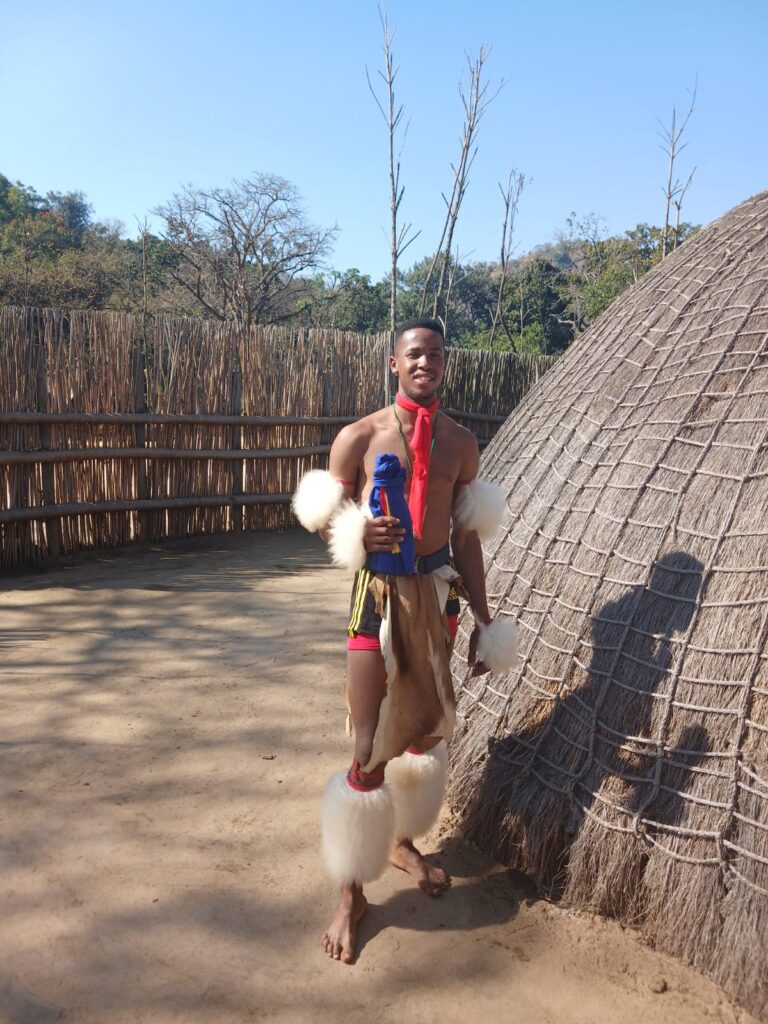
My visit to the Cultural Village in Eswatini clearly left a strong impression on me. What stood out wasn’t just the performances, but how every aspect of the experience—the dance, architecture, social structure, and storytelling—worked together to preserve a living culture. At the same time, i noticed the tension between preserving tradition and the realities of modern life, appreciating the discipline and intentionality while questioning aspects that felt overly controlling. That balanced perspective makes for a compelling reflection.
I visited the Mantenga Cultural Village, one of Eswatini’s best-known cultural attractions. Located within the Mantenga Nature Reserve, it was established to preserve and showcase authentic Swazi (emaSwati) traditions through dance, storytelling, architecture, crafts, and daily village life.
Rather than being a museum with static displays, the village offers visitors an immersive experience that demonstrates how Swazi families traditionally lived before modernization.
Traditional Dance – A Language Without Words
One of the most remarkable aspects of the experience is the traditional dance performance.
The dances are not simply entertainment; they are a form of communication. Each dance tells a story and represents an important stage of life or a social occasion. Before widespread literacy, these performances preserved history, values, and community identity.
Common themes include:
- Coming of Age – Celebrating the transition from childhood into adulthood.
- Wedding Dance – Symbolizing marriage, unity between families, and the responsibilities of husband and wife.
- Warrior Dances – Demonstrating courage, strength, discipline, and readiness to protect the kingdom.
- Royal Ceremonial Dances – Celebrating loyalty to the King and national unity.
- Harvest and Celebration Dances – Giving thanks for successful harvests and community prosperity.
Every movement, rhythm, costume, song, and even the placement of dancers has symbolic meaning. The performers are telling stories with their bodies, allowing the audience to understand emotions and events even without speaking the language.
As I observed, the dance truly speaks to the people without saying anything.
The Traditional Village
Walking through the village provides insight into how carefully Swazi society was organized.
The homestead was not randomly constructed. Every hut had a purpose, and every family member had defined responsibilities.
Typical structures include:
- The headman’s hut
- The wife’s sleeping hut
- Children’s sleeping huts
- Cooking hut
- Granary
- Cattle enclosure (the centre of the homestead)
- Storage areas
The circular layout symbolized unity while also serving practical purposes such as security, ventilation, and efficient family life.
Traditional Architecture
The huts themselves are masterpieces of indigenous engineering.
They were built using:
- Grass thatching
- Timber poles
- Woven reeds
- Mud plaster
- Natural fibres
Their dome-shaped design helps regulate temperature, keeping interiors cool during hot days and warm during cold nights. These buildings were created from locally available materials and have inspired modern discussions about sustainable architecture.
As I noticed, every detail appears intentional rather than decorative.
Hierarchy in Swazi Culture
One of the defining characteristics of traditional Swazi society is its hierarchical structure.
Respect is deeply embedded in everyday life.
The social order traditionally includes:
- The King (Ngwenyama)
- The Queen Mother (Ndlovukati)
- Chiefs
- Family elders
- Parents
- Younger family members
Each person understands their role within the family and community.
This structure creates:
- Respect for elders
- Strong family identity
- Social stability
- Clear responsibilities
- Cultural continuity
Strengths of Traditional Culture
Many visitors admire qualities such as:
- Respect for elders
- Community cooperation
- Strong family bonds
- Preservation of history
- Pride in cultural identity
- Discipline and responsibility
- Living in harmony with nature
These values have helped Eswatini preserve traditions that have disappeared in many other societies.
Modern Perspectives
As I reflected, not every traditional practice aligns comfortably with contemporary values.
Some aspects of the culture may feel restrictive today, particularly regarding:
- Gender roles
- Decision-making authority
- Expectations placed on young people
- Individual freedom
- Strict social hierarchy
This creates an interesting conversation between tradition and modernity. Many Swazi people today seek to preserve the values of respect, family, and cultural pride while adapting customs to reflect changing views on equality, education, and personal choice.
Why the Cultural Village Matters
The Mantenga Cultural Village is important because it keeps Swazi heritage alive in a meaningful way. Instead of preserving culture only in books or museums, it allows visitors to experience living traditions through music, dance, architecture, and daily life. It also supports cultural tourism, creates employment for local performers and artisans, and gives younger generations opportunities to learn about their heritage.
For visitors, it offers a deeper understanding of Eswatini beyond its landscapes and wildlife, showing how culture continues to shape the country’s identity.